Sinai is a holy land where many of the Biblical events are believed to have taken place. The Monastery of St. Catherine was built on the site of the Burning Bush, at the foot of Mt. Sinai – Mount Horeb in the Bible and locally known as Jebel Musa (Gebel Mousa) – where Moses received the Ten Commandments. Apart from the main monastery, there are several other monasteries, chapels, and Byzantine monastic ruins in the area.
Map of the Saint Catherine Area
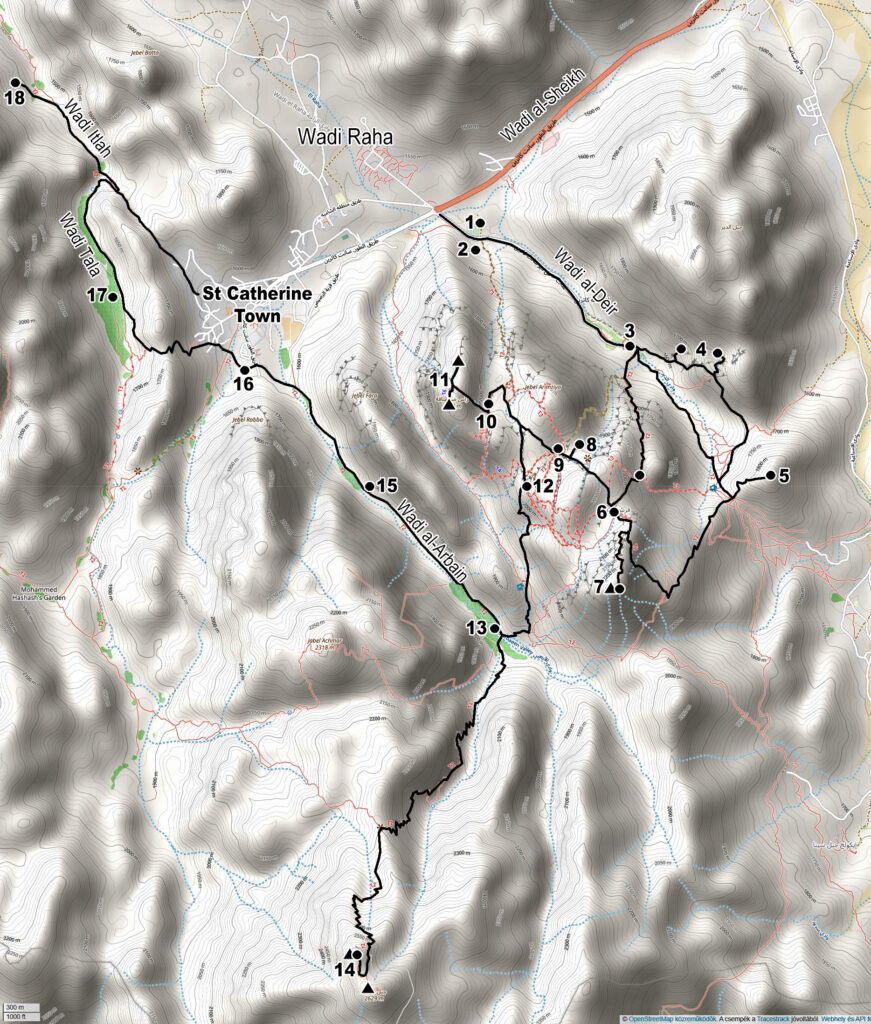
1. Nabi Harun; 2. Golden Calf; 3. Monastery of St Katherine; 4. Maqafa; 5. Jethro’s Hill; 6. Elijah’s Basin / Farsh Eliya; 7. Mount Sinai / Jebel Musa; 8. Farsh Aramziya; 9. Farsh Loza; 10. Farsh Safsafa; 11. Ras Safsafa; 12. Kinist el Hmar; 13. Monastery of the Forty Martyrs / Deir el Arbain; 14. Mount Katherine / Jebel Katrina; 15. Rock of Moses / Hajar Musa; 16. Deir Raba; 17. Monastery of Kosmas and Damianos / Deir el Rahab; 18. Chapel of St John “The Ladder” Klimakos / Galelimax.
Please note: Wadi Arbain and the Stairs of Repentance are closed at the moment, access from town is not permitted. Also, there is an ongoing development project in the city center and Wadi Raha area, so the area will look very different from what you see on older photos. Access to Monastery properties is not allowed without their permission which must be sought in advance, and is only granted to Orthodox Christian pilgrims.
Attractions in the Saint Catherine Area
Wadi el Deir & the Mount Sinai-Ras Safsafa Massif
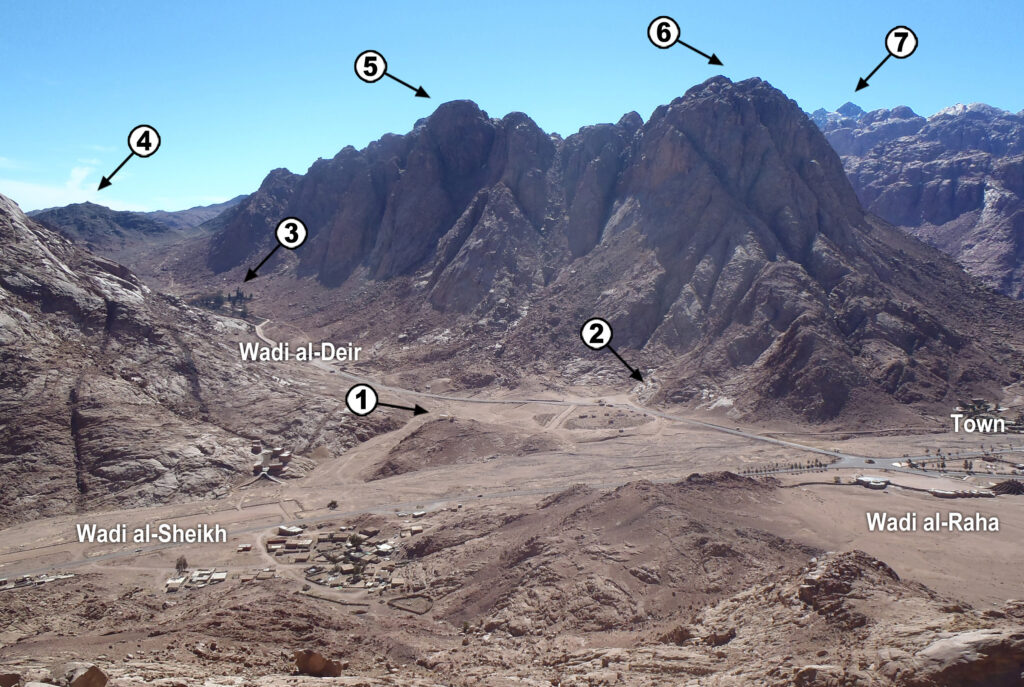
1. Nabi Harun/Chapel of Aaron; 2. Golden Calf; 3. St Catherine’s Monastery; 4. Jethro’s Hill/Ch. Sts Theodore; 5. Jebel Musa summit (southern peak of the range); 6. Ras Safsafa (northern double-peak of the range); 7. Mount Katherina (behind another range).
Jebel Musa and Ras Safsafa form a single granite massif with several peaks. Ras Safsafa rises dramatically above the broad plain of Wadi al-Raha, traditionally believed to be the gathering place of the Israelites, while the peak of Jebel Musa crowns the opposite end of the range above Saint Catherine’s Monastery. It is the higher peak, even if looking from this perspective (as on the photo above) it is not evident. Tucked between the rugged cliffs and ridges near the summit are secluded basins that once served as retreats for monks and hermits. These hidden pockets preserve chapels, hermit cells, gardens, wells, and ancient reservoirs, creating a unique blend of spirituality and desert survival.
Wadi Raha
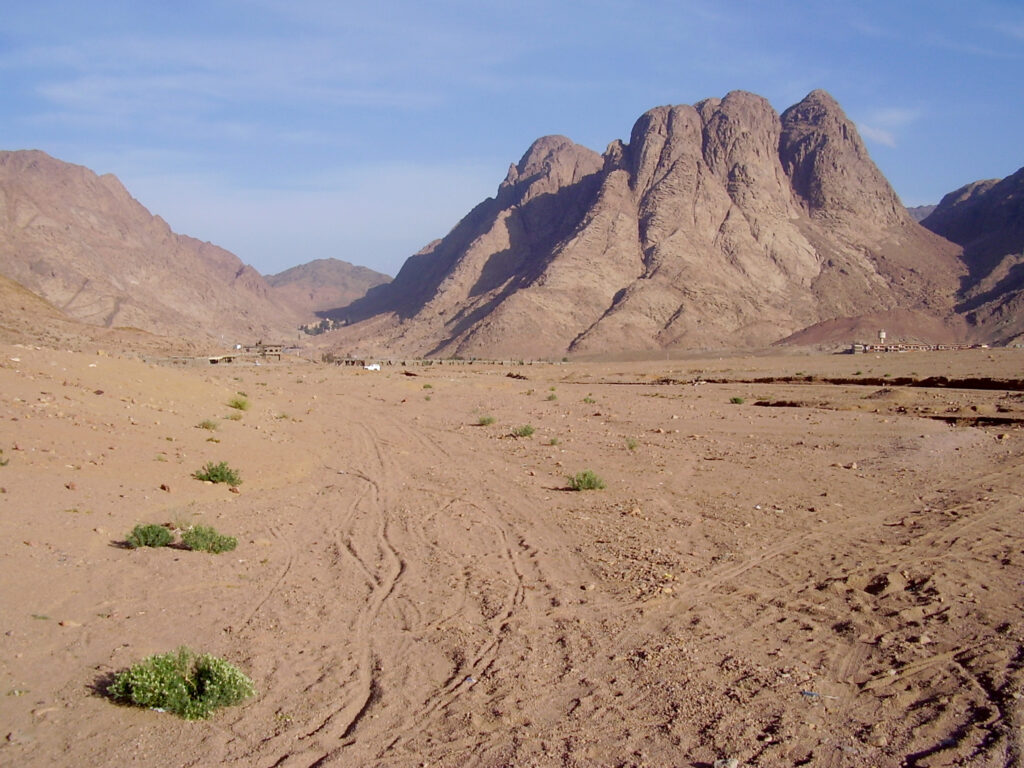
Wadi Raha, a wide plain at the foot of the Jabal Musa-Ras Safsafa range, is one of the locations traditionally linked to the Exodus. Its vast open space is believed by many to have been the Encampment of the Israelites when they set up their tents “at the foot of the mountain” (Exod 19:17). The view of Ras Safsafa dominates from here, the peak of Mount Sinai is hidden behind it. You can also see Wadi el Deir, the Monastery of St Katherine in the wadi, and Jethro’s Hill at the head of the wadi. Today, there are hotels and an ongoing development project at the end of the plain nearest to town, but the rest of Wadi Raha is still a natural desert and grazing ground with clusters of Bedouin settlements and a fantastic view.
Nabi Harun & Chapel of Aaron
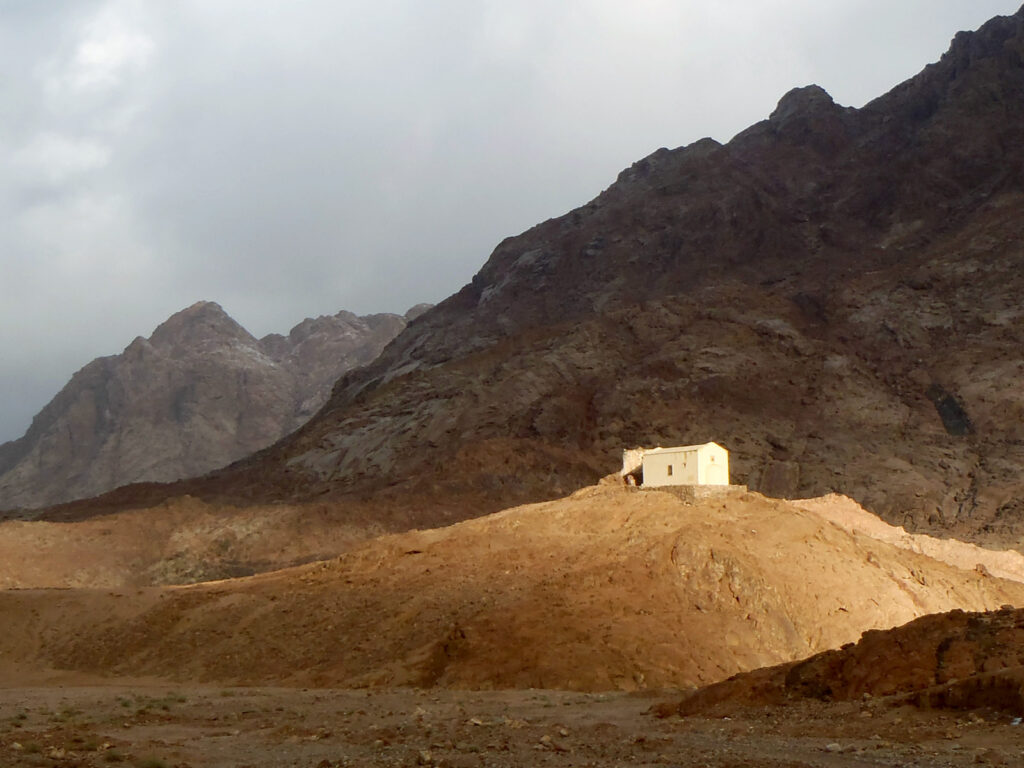
The Chapel of Aaron, standing on a low hill at the mouth of Wadi al-Deir in an area known as Nabi Harun, is a small Christian shrine built beside a Muslim maqam. Both buildings are dedicated to Aaron, prophet (nabi) Harun in Arabic, brother of Moses. Overlooking a Bedouin cemetery below, the chapel marks the entrance of the wadi leading to Saint Catherine’s Monastery and Mount Sinai.
The Golden Calf
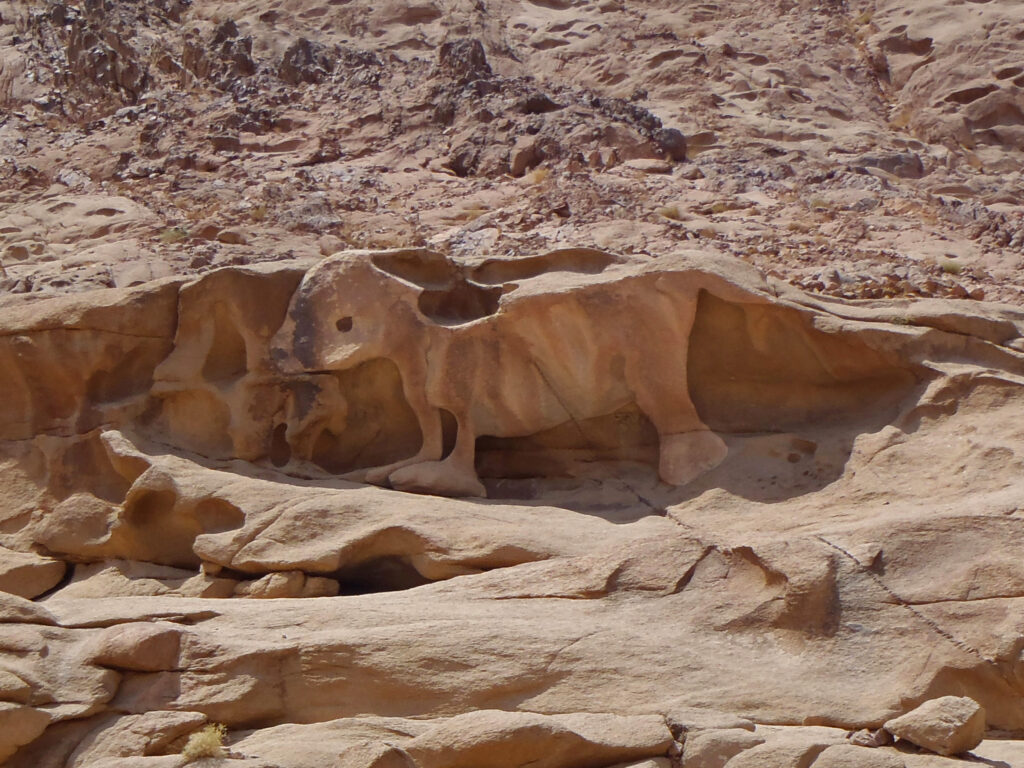
At the foot of Ras Safsafa lies a site traditionally associated with the biblical Golden Calf episode, where the Israelites, during Moses’ absence on the mountain, worshipped a golden idol (Exod 32). Local tradition places this event in the valley at Saint Catherine’s Monastery, Wadi el Deir, where a distinctive rock formation is pointed out as a reminder of the story. If you look carefully at the rock formation, you can make out the shape of a calf.
The Monastery of St. Katherine
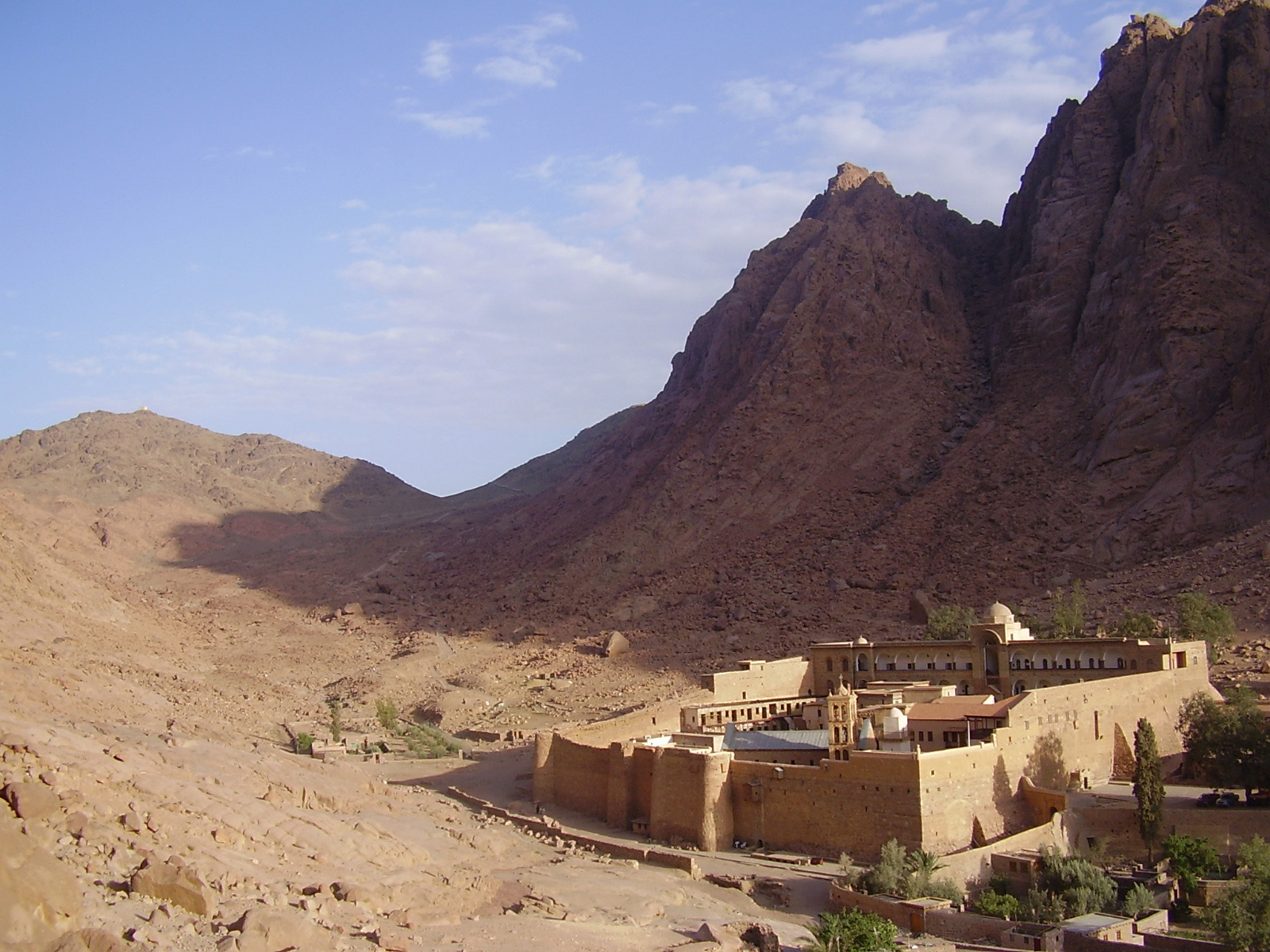
Saint Catherine’s Monastery, officially the Sacred Monastery of the God-Trodden Mount Sinai, was built by Emperor Justinian in the 6th century at the foot of Jabal Musa. It is the world’s oldest continuously working monastery and a UNESCO World Heritage Site. The monastery houses priceless icons, manuscripts, and the famed “Burning Bush” revered as the one encountered by Moses. Its fortress-like walls sheltered monks for centuries, making it both a spiritual and cultural treasure. Today, it remains an active monastic community and a key pilgrimage destination for Christians worldwide.
Mt. Sinai / Jebel Musa
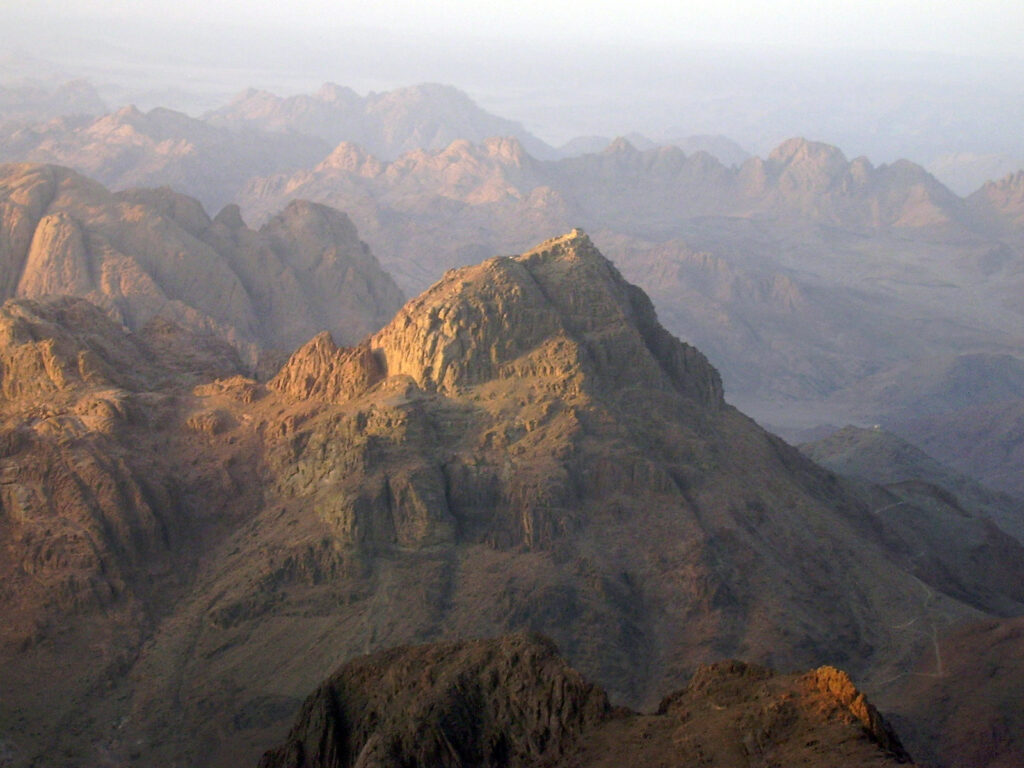
The summit of Jebel Musa, rising 2,285 meters (7,497 ft), is revered as the traditional location of Mount Sinai, where Moses received the Ten Commandments. At the peak stands the Chapel of the Holy Trinity, a small structure rebuilt in the 20th century on earlier Byzantine foundations, alongside a modest mosque. Visitors ascend by the camel path to greet sunrise or sunset from the summit. The breathtaking panorama of rugged granite peaks and desert plains intensifies the mountain’s aura. But the range of which Jebel Musa is part of
Elijah’s Basin / Farsh Eliya
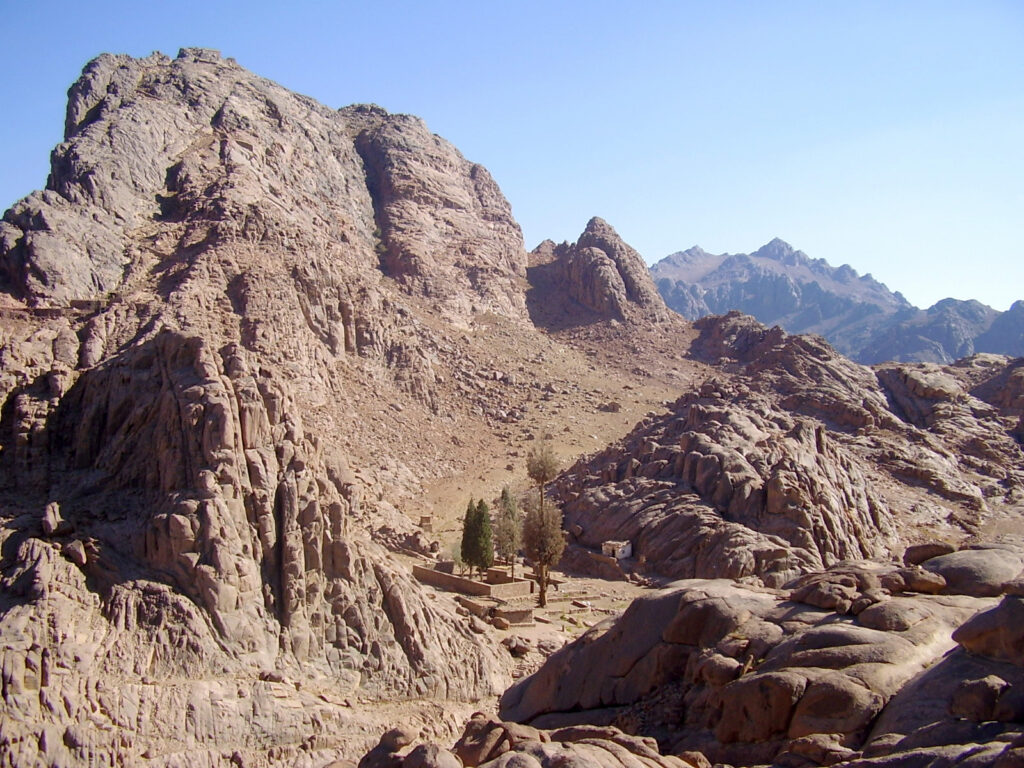
Elijah’s Basin (Farsh Eliya) is a natural terrace situated below the summit of Jabal Musa, serving as a resting and gathering place for pilgrims making the ascent. Tradition holds that the prophet Elijah sought refuge here, giving the site its name. The basin is marked by several chapels and a church, including the Chapel of Saint Marina the Virgin, the Church of Elijah, and the Chapel of Saint Stephen of Sinai. The basin’s open space, access to water, and flat ground made it a practical encampment site for monks and travelers, while its religious associations have made it an integral stop on the sacred route to the summit.
The Steps of Repentance
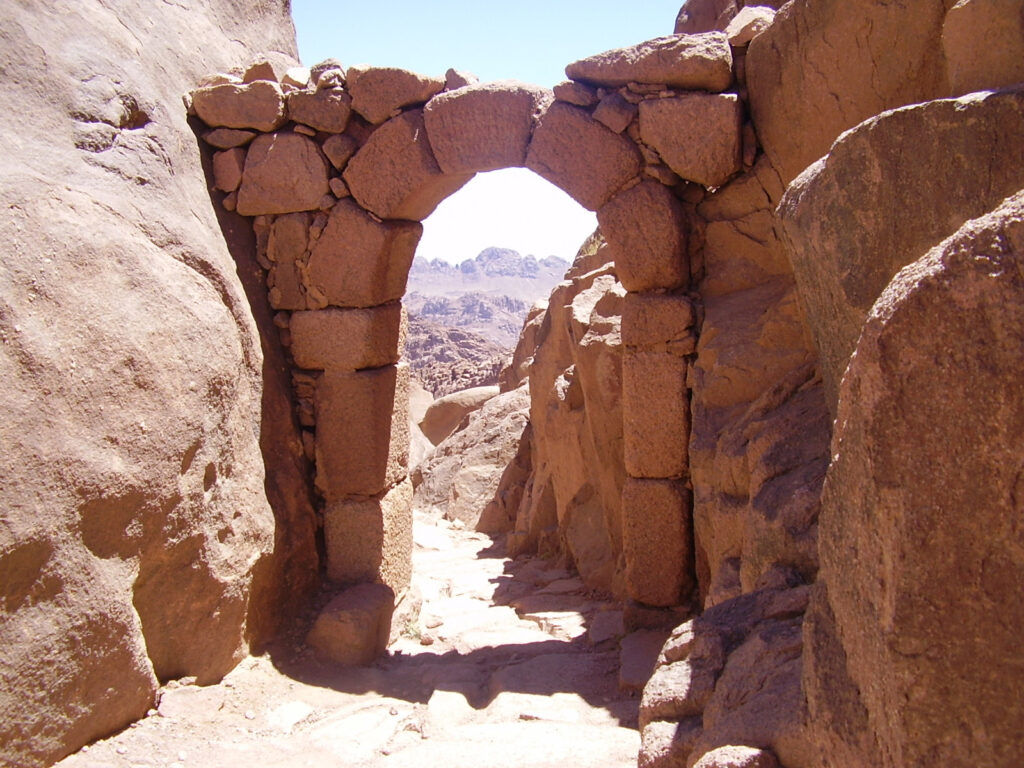
From the monastery to Elijah’s Basin the Steps of Repentance climb roughly 3,000 stone steps, then a further ~750 steps lead from the basin to the summit— about 3,750 in all. Along the ascent pilgrims passed two gates and a wayside chapel, markers of the ancient route. Tradition places the completion of the stairway in the 6th century, when monks carved and laid the steps as acts of penance to reach the holy peak. Steep, uneven, and awe-inspiring, it was the most ascetic approach used by pilgrims.
Farsh Aramziya & Chapel of Saint John the Baptist
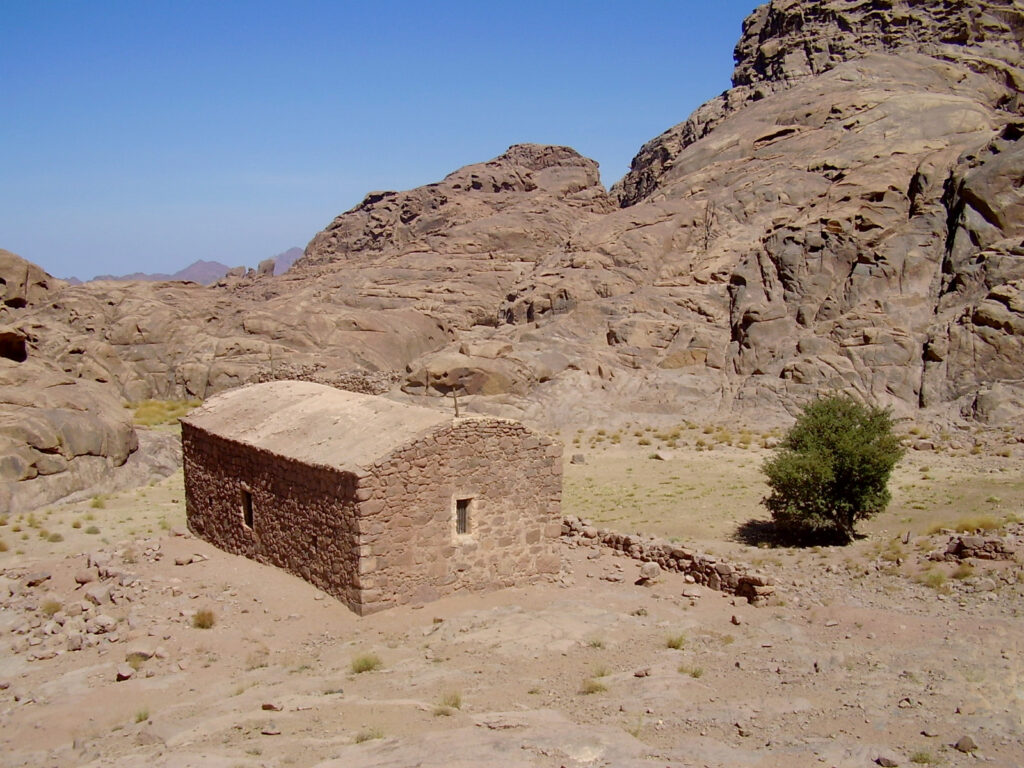
From Elijah’s Basin, a stone-paved path leads north toward Ras Safsafa. A short detour off this path reaches a hidden terrace, Farsh al-Aramziya—also known as Farsh Zahrour, named for the Sinai hawthorn (Crataegus sinaica) found in the basin. Here stands a small stone chapel dedicated to Saint John the Baptist (“Saint John the Forerunner”). The site exemplifies Sinai’s hermitage network: chapels tucked onto rocky benches that catch a little soil, water, and shelter. The masonry is simple— likely rebuilt over time—but the dedication and setting suit the area’s solitary character, where scripture is read, prayers are chanted, and watch is kept over the valleys below.
View of Monastery
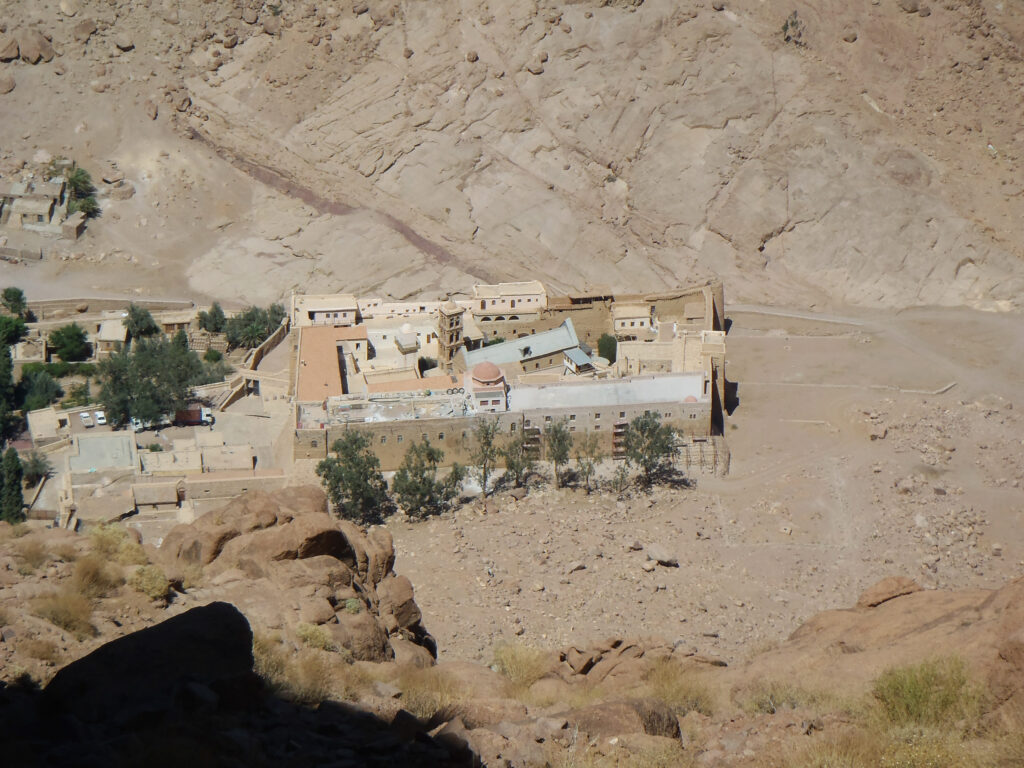
At the edge of the basin of Farsh al-Aramziya, at the top of a narrow gully dropping steeply into Wadi el Deir, you can get a spectacular view of the monastery.
Farsh Loza & Chapel of Saint Gregory of Sinai
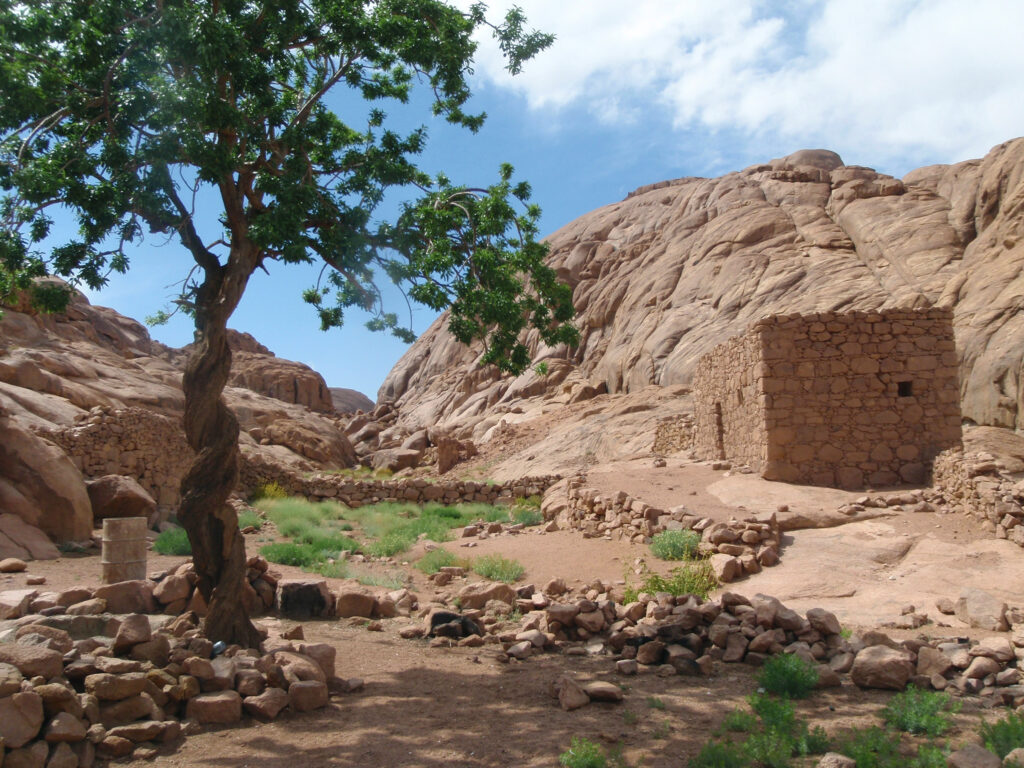
Right on the path to Ras Safsafa lies a small basin called Farsh Loza, named for the twisted-trunk almond tree beside a modest chapel honoring Gregory of Sinai. He was a 14th-century monk and hesychast, a practitioner of inner stillness and continual prayer in the Orthodox tradition. The chapel has a tiny footprint and rough fieldstone masonry, much like other hermit chapels scattered around Jebel Musa. In a nearby hidden little basin is the Chapel of Saint Anne.
Farsh Safsafa & Chapel of the Holy Girdle of the Virgin Mary
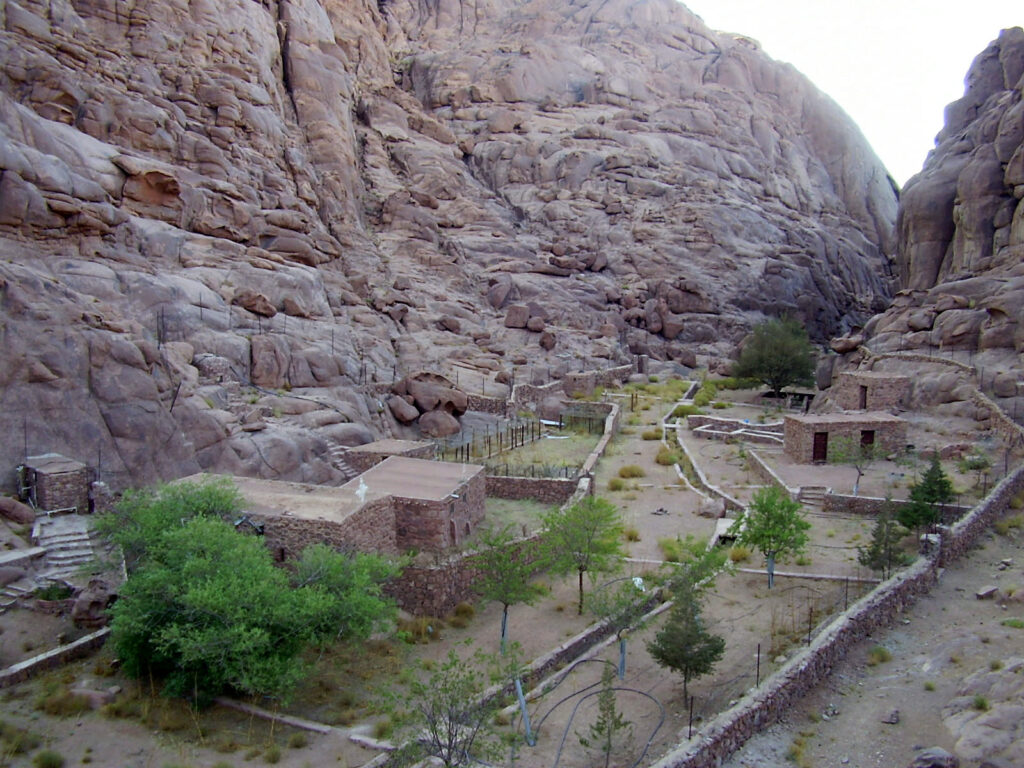
At the end of the footpath, tucked between granite walls, lies another quiet basin, known as Farsh Safsafa, with a small walled garden, a well, and a chapel. From the basin’s mouth—where the path drops into a steep gully—you can see the Nabi Harun area. The chapel is dedicated to the Holy Girdle of the Virgin Mary (the Theotokos), a long-standing Marian devotion in the Christian East, commemorated here in simple stone and prayer.
Ras Safsafa
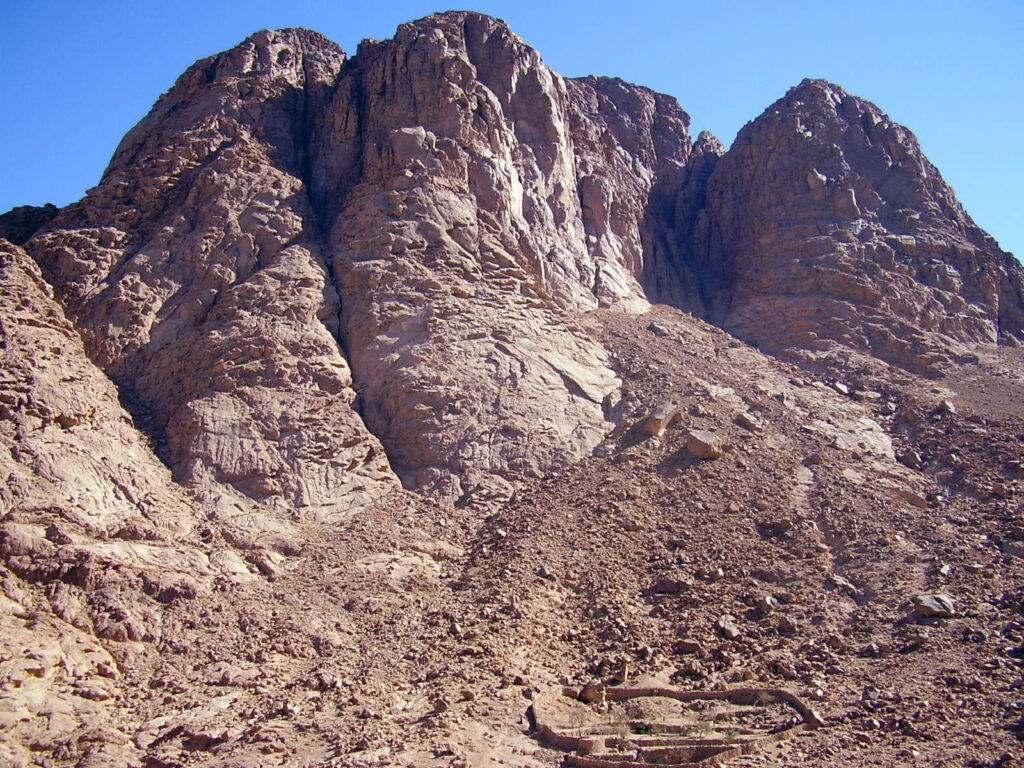
Dominating the view from Wadi Raha and St Catherine, above Farsh Safsafa rise the twin peaks of Ras Safsafa, which some identifed as Mount Sinai. The highest peak is the southern one, but both offer a specacular views over the Wadi al-Raha plain and the town. It is a tough and tricky climb over steep drops, only recommended for experienced hikers with a good guide.
Chapel of Saint Panteleimon / Kinist el Homar
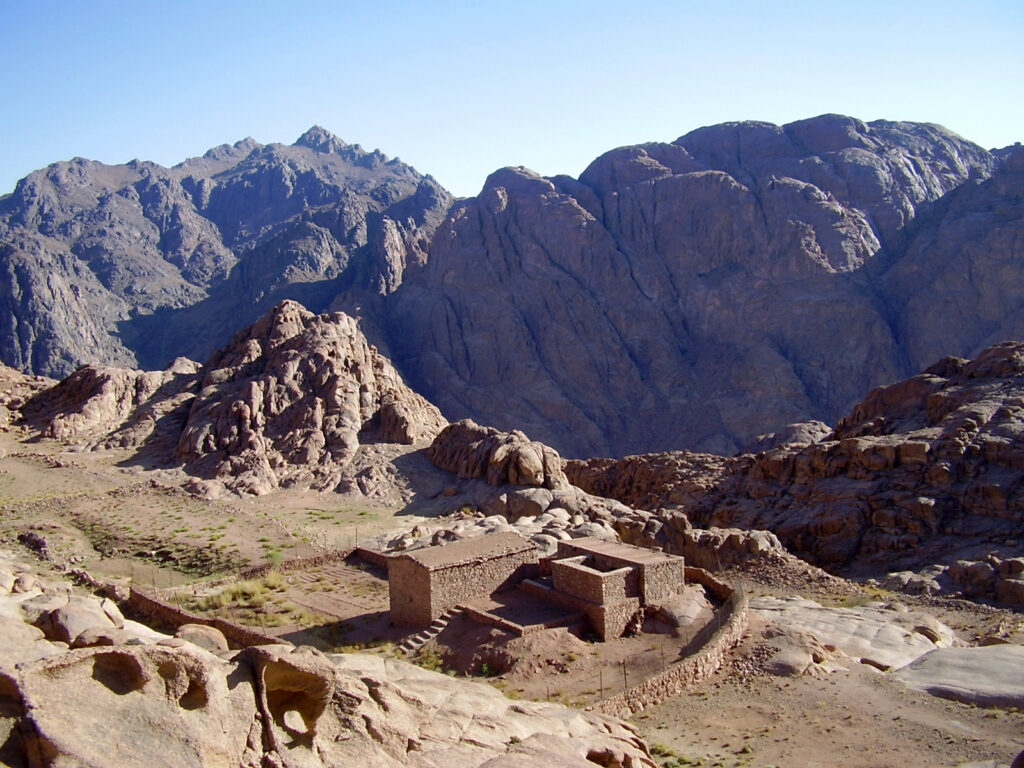
Nicknamed the “Chapel of the Donkey” (Arabic: Kinist el-Hmar), this small shrine honors Saint Panteleimon, the physician-martyr beloved for healing miracles. It stands on one of the approach shelves to the mountain, a quiet stop where travelers pause before or after the strenuous climb. The Bedouin nickname recalls a local tale: a hermit lived here alone and each Sunday descended with his donkey to the monastery to attend the liturgy and carry back supplies; one day the donkey went alone, and the people understood the monk had died.
Monastery of the Forty Martyrs / Deiral-Arbain
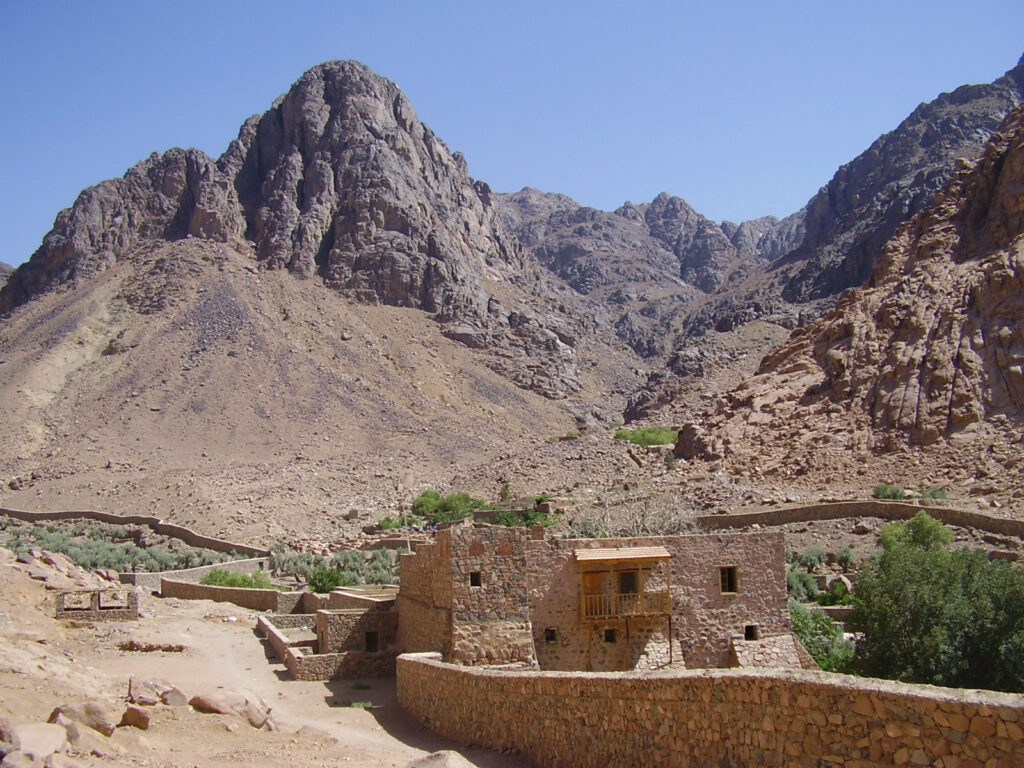
Standing in a valley southwest of Jabal Musa, the Monastery of the Forty Martyrs, known locally as Deir al-Arbain, commemorates forty Christian soldiers martyred for their faith. Tradition holds that hermits lived here from the early Byzantine period, drawn to its solitude and spring. The monastery is quite small, but its orchard, still beautifully maintained, is remarkably large. Although the building is more modest than Saint Catherine’s, it reflects the rhythm of monastic life in Sinai, where prayer was joined with labor in the fields. In the orchard is an old chapel dedicated to Saint Onuphrius, a hermit from Upper Egypt who reportedly lived in a nearby rock shelter for around 70 years and died in 390 CE.
Mount Katherina & Chapel of Saint Catherine
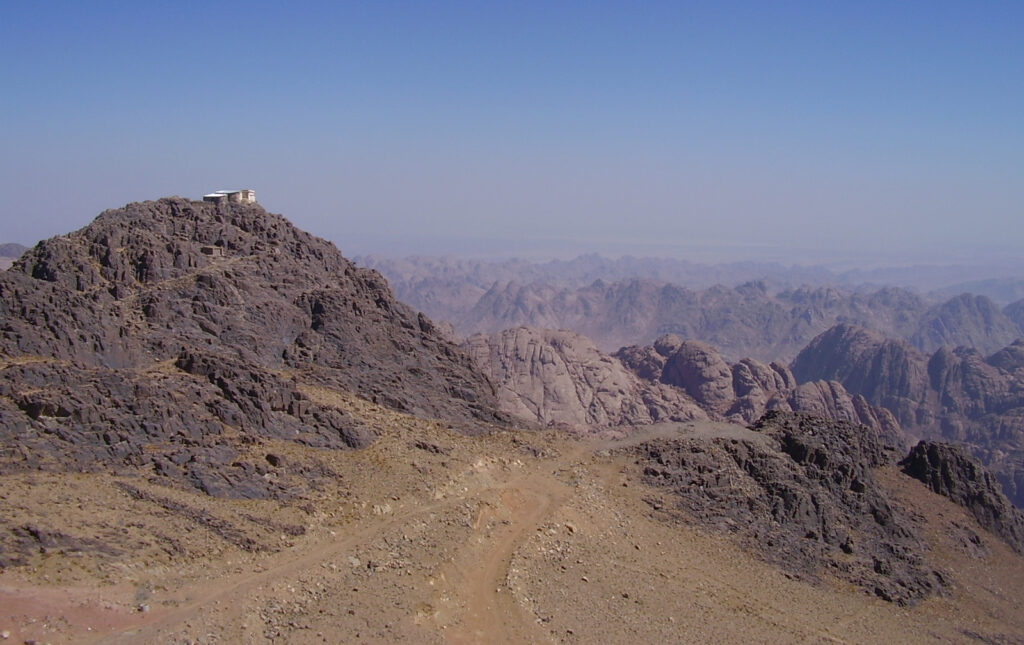
Mount Catherine, at 2,629 meters (8,625 ft), is the highest peak in Egypt, towering over the Sinai range. It is traditionally linked with Saint Catherine of Alexandria, whose body, according to legend, was miraculously transported by angels to the mountaintop after her martyrdom. A chapel at the summit commemorates this tradition. The mountain is a popular climb for those based in Saint Catherine City, offering expansive views of Sinai’s granite highlands. The peak’s association with Christian saints has made it an important pilgrimage and hiking destination since medieval times.
Rock of Moses (Hajar Mousa) & Chapel of the Birth of the Holy Virgin
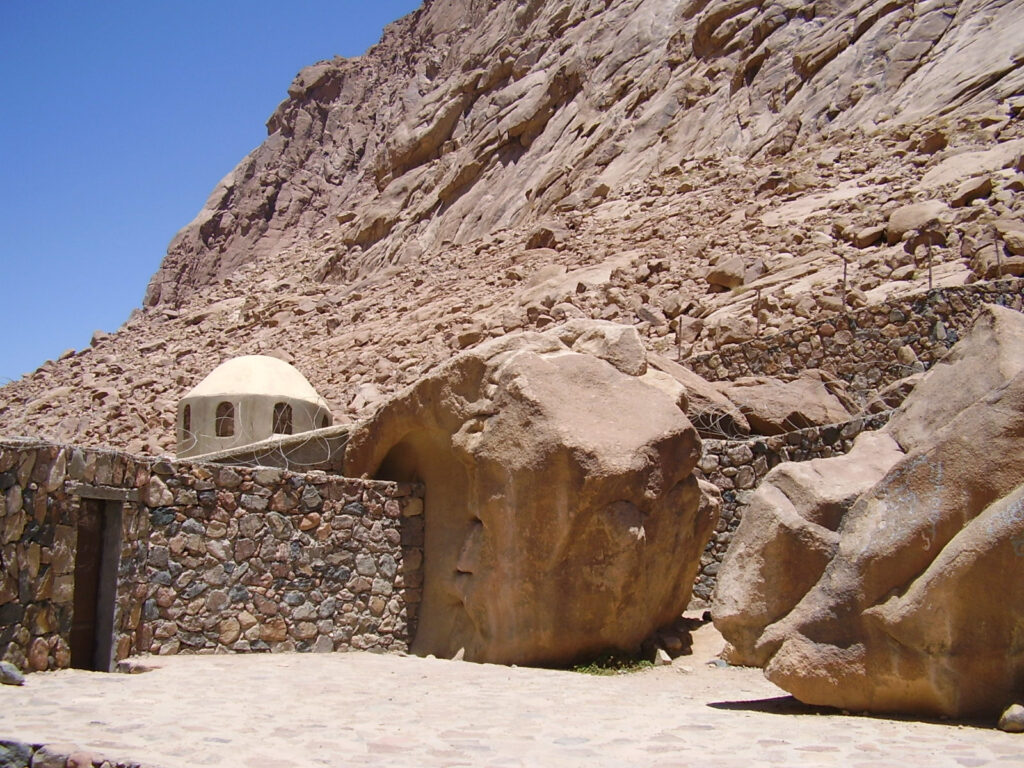
Near the grounds of the Monastery of the Forty Martyrs lies a chapel dedicated to the Nativity of the Virgin Mary, built beside what tradition identifies as the Rock of Moses. According to local lore, this rock is where Moses struck water for the Israelites (Exod 17). The twelve clefts on it, according to local tradition, represent the twelve springs described in the Quran.
Monastery of the Holy Apostles / Deir Raba
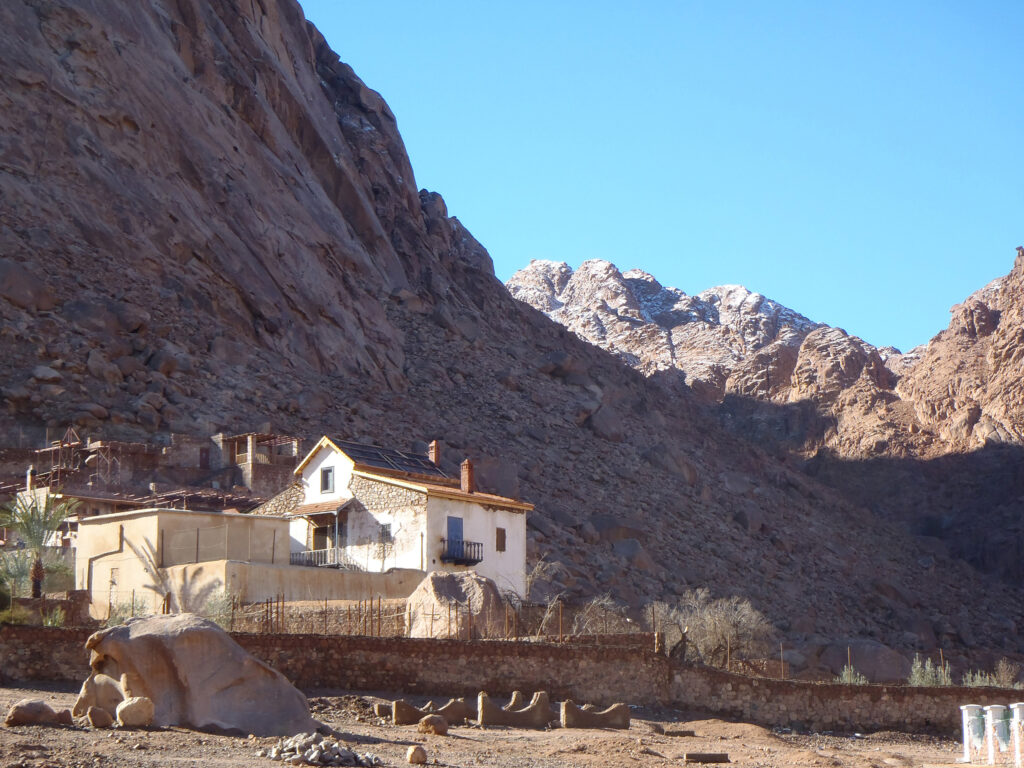
Located within Saint Catherine town, the Monastery of the Holy Apostles, known by the Bedouin as Deir al Raba, is one of the lesser-known religious sites connected with Sinai’s monastic heritage. Tradition holds that it was founded in honor of the Apostles, and though much smaller than Saint Catherine’s Monastery, it served as a spiritual retreat and local place of worship for monks. It includes a simple chapel and monastic quarters, reflecting the modest character of Sinai’s secondary monasteries.
Wadi Tala & Monastery of Saints Kosmas and Damianos
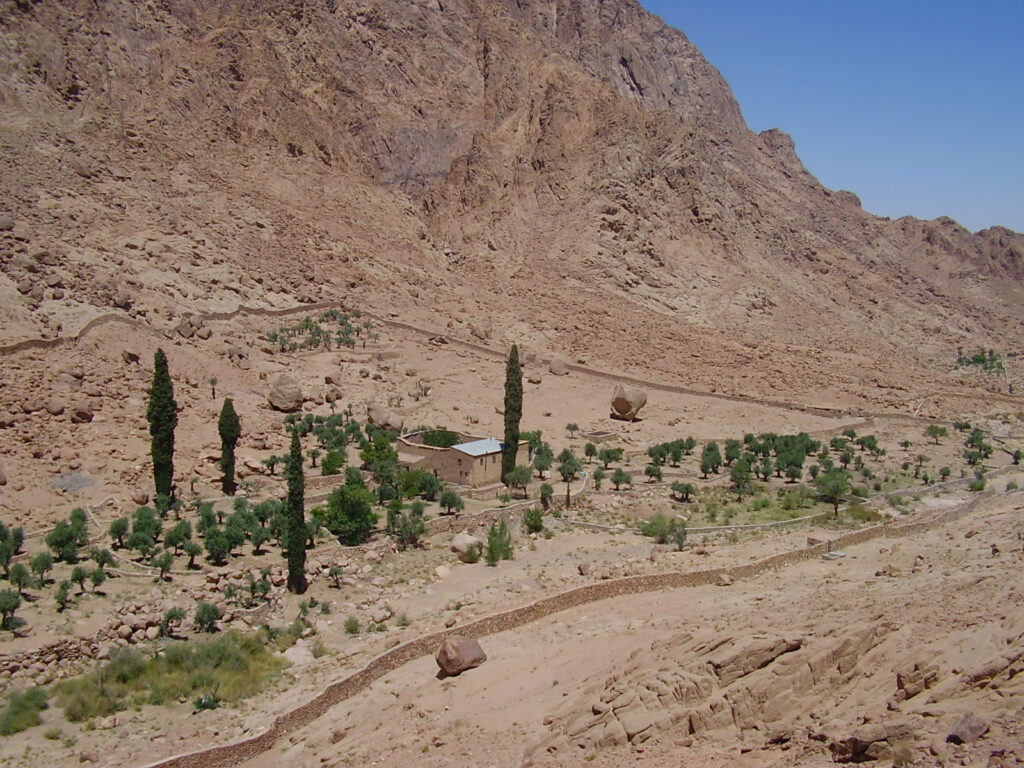
The Monastery of Saints Kosmas and Damianos, or Deir al-Rahab, lies a short distance from Saint Catherine town in a secluded valley, Wadi Tala. Dedicated to the twin physician-saints, it served as a retreat for monks seeking solitude and prayer. This small monastery also stands within an expansive orchard of olives, almonds, and apricots, complemented by a vegetable garden. The produce supports the monastery, but the daily care of the trees and fields is carried out by local Bedouins. This cooperation, unchanged for centuries, reflects the friendly interdependence between the monastic community and the native population of Sinai.
Wadi Itlah & Chapel of Saint John Klimakos
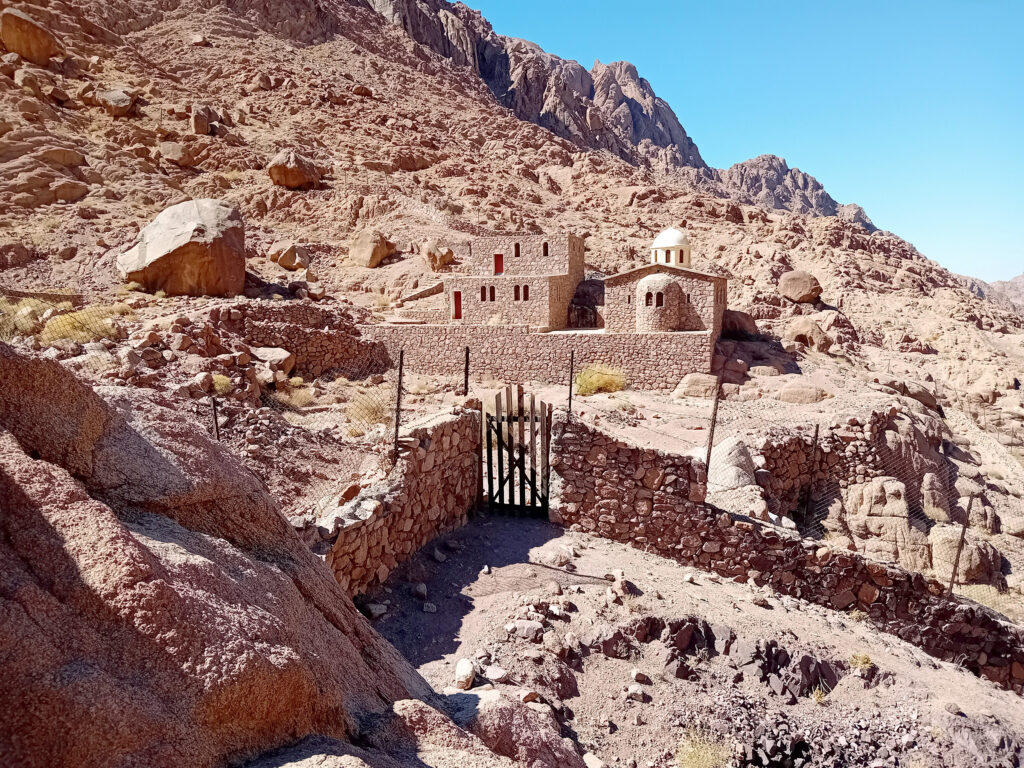
Saint John Klimakos (Climacus), author of The Ladder of Divine Ascent, lived as a hermit near Mount Sinai in the 6th century before becoming abbot of Saint Catherine’s. His cave and adjacent chapel remain a revered site, situated in today’s Wadi Itlah (called Thola at the time), a short walk from Saint Catherine town. In the long and gently descending wadi you find many lush Bedouin gardens, some of which cater for visitors.
Blue Desert / Jebel Mlawn
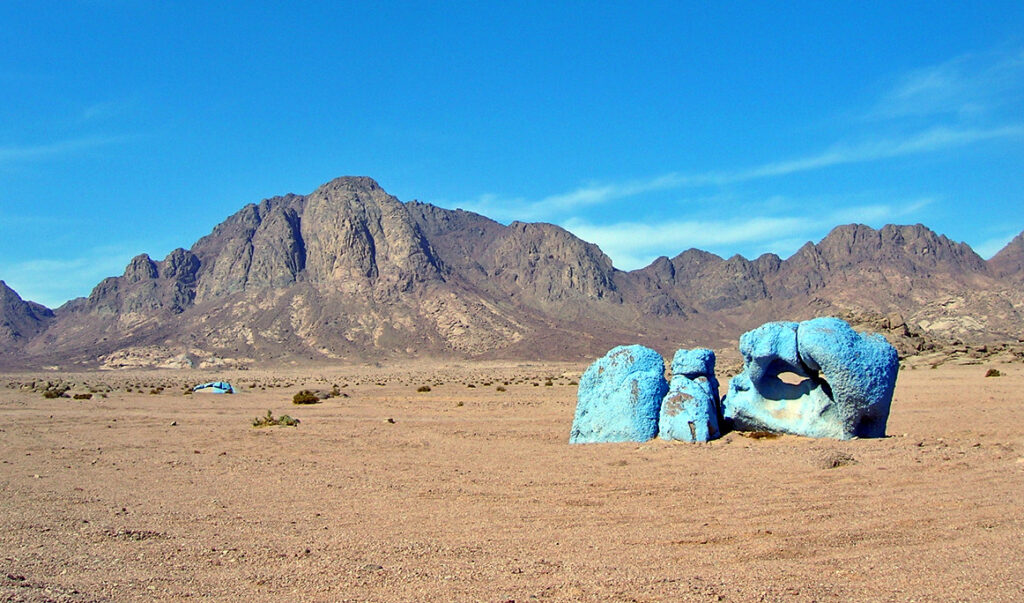
An open desert plain close to the town of Saint Catherine, encircled by rugged mountain ranges, made famous by having several outcrops and rock formations painted blue by Belgian artist Jean Verame to commemorate the peace agreement between Egypt and Israel. It is a popular picnic site approachable by off-road vehicles.
ATTRACTIONS: Red Sea Coast > St Catherine & Mt Sinai > The High Mountain Region > The Desert > North Sinai