Sinai is a Biblical land, and many visitors come for this reason alone. Mount Sinai, believed to be the Biblical Mount Horeb and locally known as Jebel Musa, is a peak sacred to all three Abrahamic religions. However, many visitors do not realise that there are many more ancient Christian sites around the town of St Catherine, including dozens of ancient churches and chapels, several other monasteries, and hundreds of Byzantine monastic ruins, making the region one of the most important centres of early Christian monasticism in the world.
Hidden Mount Sinai – The Monastic Heritage
1 or 2 days, moderate with three steep climbs
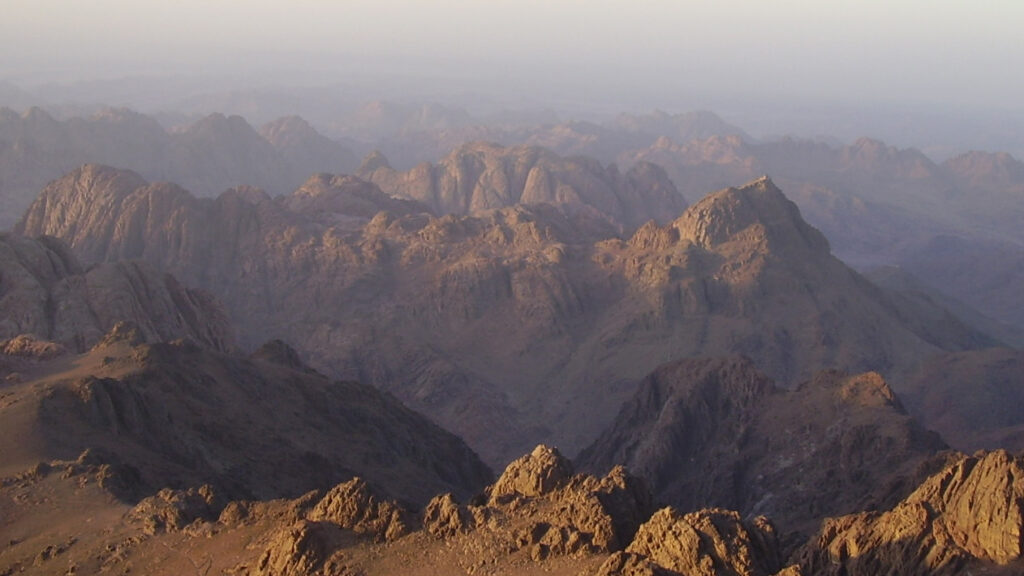
Along the way: Kinst el-Homar, Farsh Safsafa, Farsh Loza, Farsh Armziya, Farsh Eliya, Steps of Repentance upper gate, summit of Mt Sinai, and, in case of the overnight program, the Monastery of the Forty Martyrs.
The Highest Chapel in Egypt
2 days, difficult
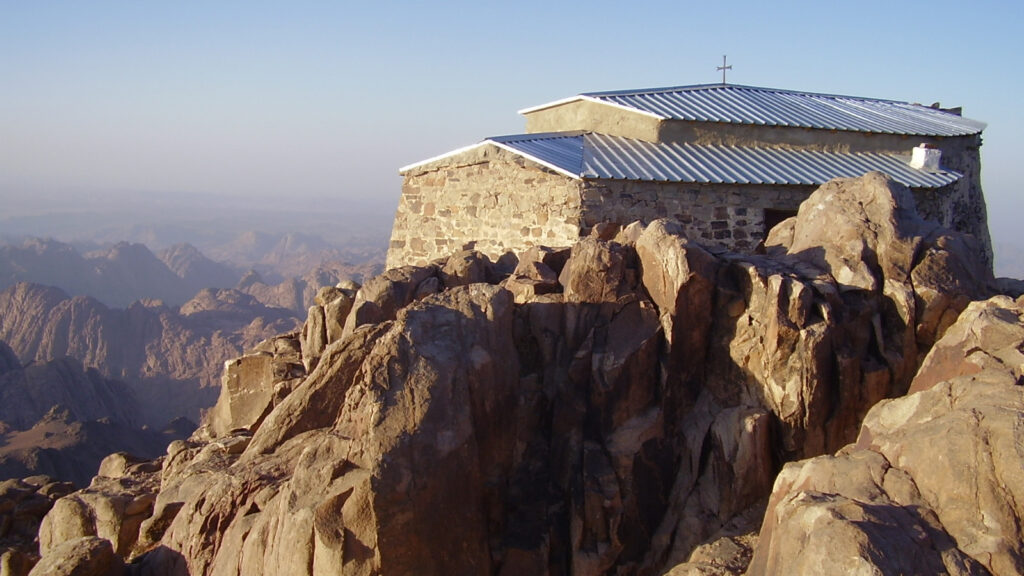
Located right on the summit of Jabal Katherina, Egypt’s highest mountain, the chapel overlooks the whole of South Sinai’s rugged interior. Mount Sinai is just below you, but unlike that holy peak, here you can pray in solitude. There is a simple shelter below the chapel where we may sleep, or descend to a mountain garden for the night (recommended when colder).
Chapel of St John Climacos & Monastery of Kozmas and Damianos
1-day, easy-moderate
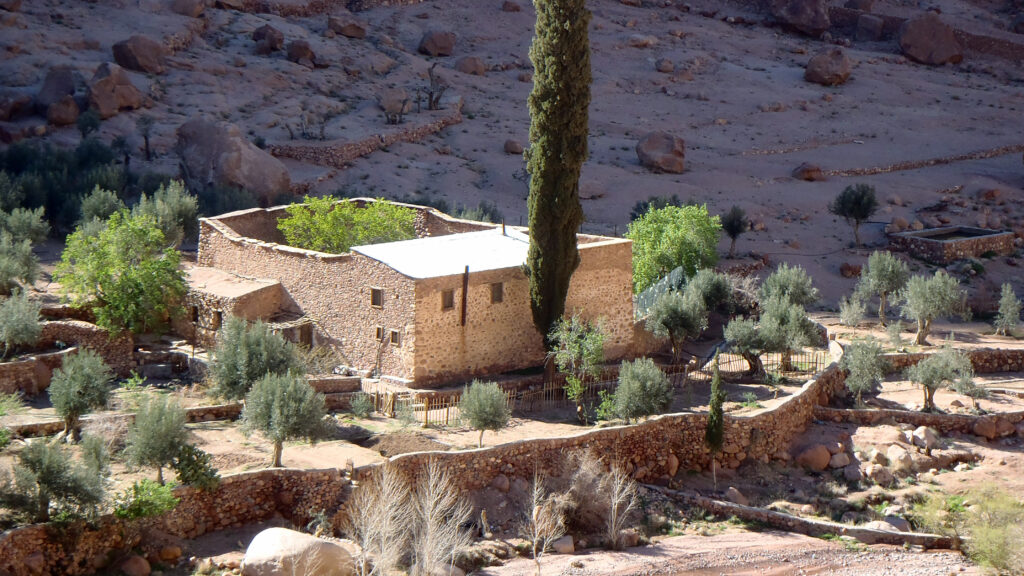
We start with visiting the Chapel of St John Climacos located next to the hermit’s cave in Wadi Itlah, which is mostly a gentle downhill from town. Then we retrace our steps, now gently uphill, until we reach Wadi Tala. We pass many big orchards and olive groves, most of them belonging to the Monastery. In the last one stands the Monastery of Kozmas and Damianos, set among big boulders. A bit further up is a Bedouin garden where we take a rest, before climbing a short but steep pass. From the top, the voew of the whole city opens up, with the Monastery of the Holy Apostles and the peak of Mount Sinai in the background.
Wadi Feiran – The Biblical Rephidim
1-day, road trip
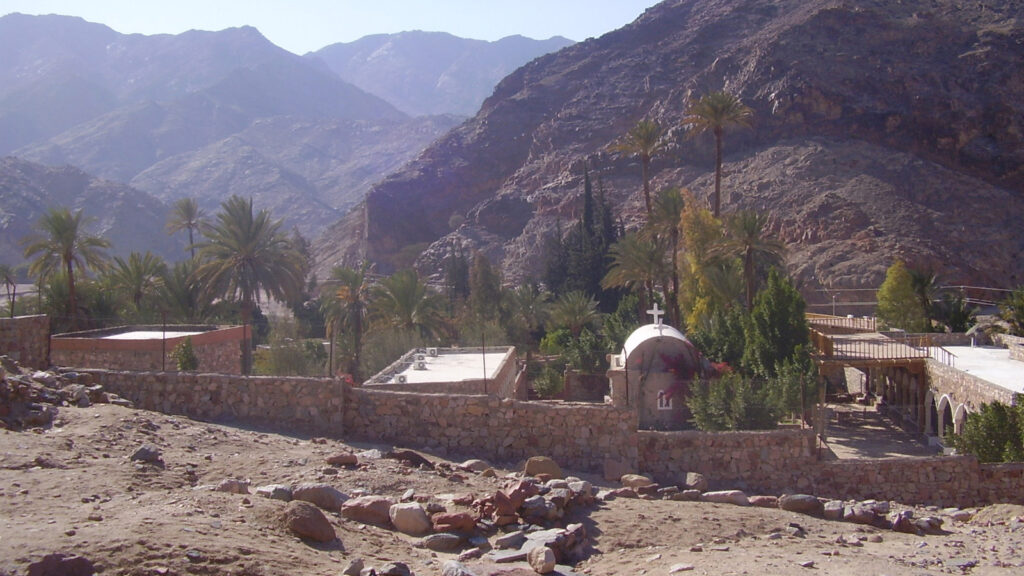
Wadi Feiran is the biggest oasis in South Sinai and believed to be the Biblical Rephidim where Moses overlooked the battle from Jabal Tahoun. The hill still stands with the ruins of an ancient chapel, and at its foot are the ruins of the old and the new Convent. There are many hermit caves in the rock faces of the wadi.
Bustan el Birka – Byzantine Monastic Ruins
1-day, moderate
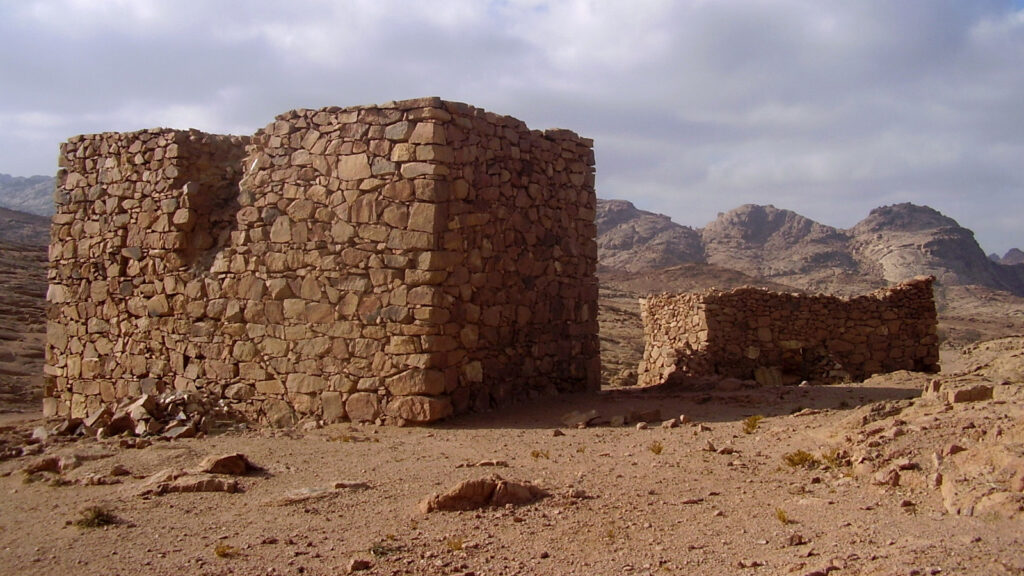
There are many ancient byzantine ruins scattered around the basin of Wadi Freah, in an area known as Bustan el Birka. You can only get here on foot or camel, after a fairly short but steep climb. It is an area for people with a good archaeological understanding as the ruins don’t look that much different from newer Bedouin structures. Which is understandable, as the Bedouin learned their craft from the Byzantine settlers and used the same materials (stone and earth). There are some telling signs which our guide should be able to point out.
Wadi Rahaba & the Monastery of Rumhan
1 or 2 days, moderate
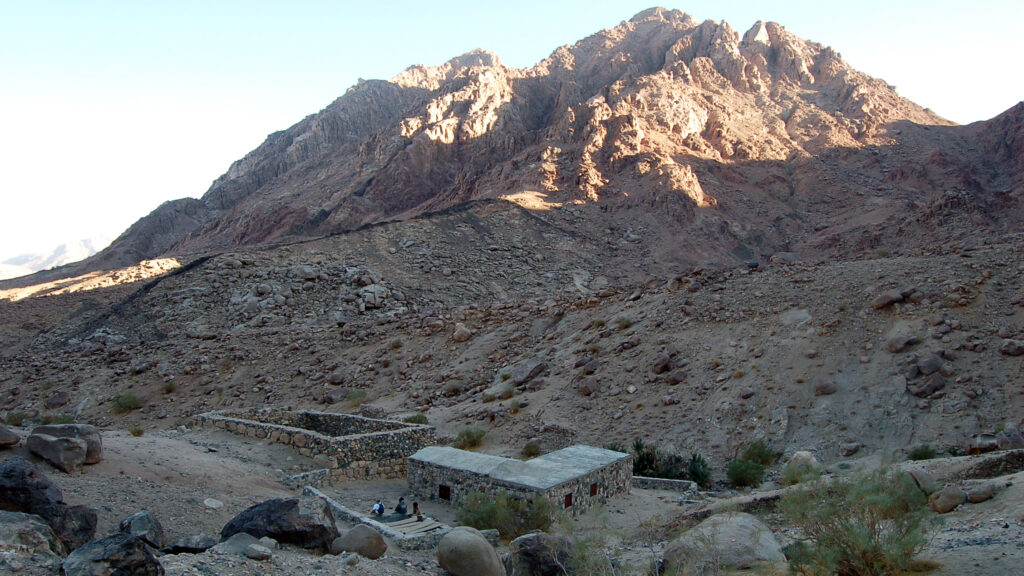
The first part of the trip is by car, passing the area known as Wadi Rahaba. Here, similarly to Bustan el Birka, there are many Byzantine monastic ruins, some are in quite a good shape. From the end of the dirt track through fairly flat and open terrain, we will descend on foot into a steep gully. After 40 minutes of descent we reach Wadi Rumhan where the ruins of the monastery stand. Next to it is a newer building built by the Monastery of St Katherine, so their visiting monks and guests can stay over. The return is via the same gully, but now it’s all uphill. Camels can be organized but it needs to be arranged ahead. You have the option to stay overnight in a simple Bedouin garden or camp site.
ACTIVITIES: Water Sports > Around Town > Mount Sinai Hike > Christian Sites > Hiking & Trekking > Walking & Camel Safaris > 4×4 Desert Safaris > Rock Climbing > Body, Mind & Spirit